

Nyungwe National Park is one of the oldest rainforests in Africa and Rwanda's home for chimpanzees. It is also where you will find the Nyungwe canopy walk, a suspension bridge strung high above the treetops. Kigali Safaris helps you plan Nyungwe trips from Kigali, explains the fees for chimpanzee trekking in Rwanda, and connects you with RDB-licensed tour operators and drivers who can take you there. We are not a tour operator and we do not sell fixed packages: we help you compare options and book with licensed providers.
Nyungwe covers more than 1,000 square kilometres of mountain rainforest in the south west of Rwanda. The forest stayed green through the last ice age, which explains its rich wildlife: 13 primate species, more than 300 bird species and a habituated troop of around 400 Ruwenzori black and white colobus monkeys.
Things to do in Nyungwe National Park
- Chimpanzee tracking: early morning treks to find a habituated chimpanzee community.
- Canopy walkway: a guided walk to the 160 metre bridge near Uwinka.
- Colobus monkeys: the large colobus troop is a favourite with photographers.
- Guided birding: Nyungwe holds many species found only in the Albertine Rift.
- Hiking trails: from the short Igishigishigi trail to longer routes such as Imbaraga and Umuyove, and the multi-day Nyungwe Traverse.
- Tea estates: Gisovu and Gisakura sit right on the edge of the forest.
Nyungwe fees (as of October 2026)
These prices come from the Nyungwe Management Company tourism pricing scheme for 2025 to 2026. Park entry is charged per night and the activity fee is added on top.
| Fee | International visitor | Foreign resident in Rwanda/EAC | Rwandan/EAC citizen |
|---|---|---|---|
| Park entry, adult, 1 night | US$100 | US$60 | RWF 10,000 |
| Park entry, adult, 2 nights | US$150 | US$90 | RWF 15,000 |
| Park entry, child 6 to 12, 1 night | US$50 | US$30 | RWF 5,000 |
| Canopy walkway, birding, other primates | US$40 | US$20 | RWF 5,000 |
| Chimpanzee tracking | US$150 | US$75 | RWF 25,000 |
| Chimpanzee habituation (max 4 people) | US$200 | US$100 | RWF 30,000 |
African citizens from outside the EAC pay the same entry as foreign residents. Special activities need a minimum of two people (a solo traveller pays for two) and a maximum of eight. Fees change from time to time, so we confirm them when we send your quote. For a full trip budget see our Rwanda safari cost guide.
The Nyungwe canopy walk
The canopy walkway hangs 70 metres above a forested ravine and stretches 160 metres. You reach it on a guided walk along the Igishigishigi trail, about an hour from the Uwinka Reception Centre, passing orchids, butterflies and colourful birds on the way. It can also be added to the longer Imbaraga or Umuyove trails.
The walk is open all year. Rain is more likely in the afternoon, so a morning slot is often more comfortable. The bridge moves a little underfoot, which most people find exciting rather than frightening, but tell your guide if you are nervous about heights.
Chimpanzee trekking in Rwanda
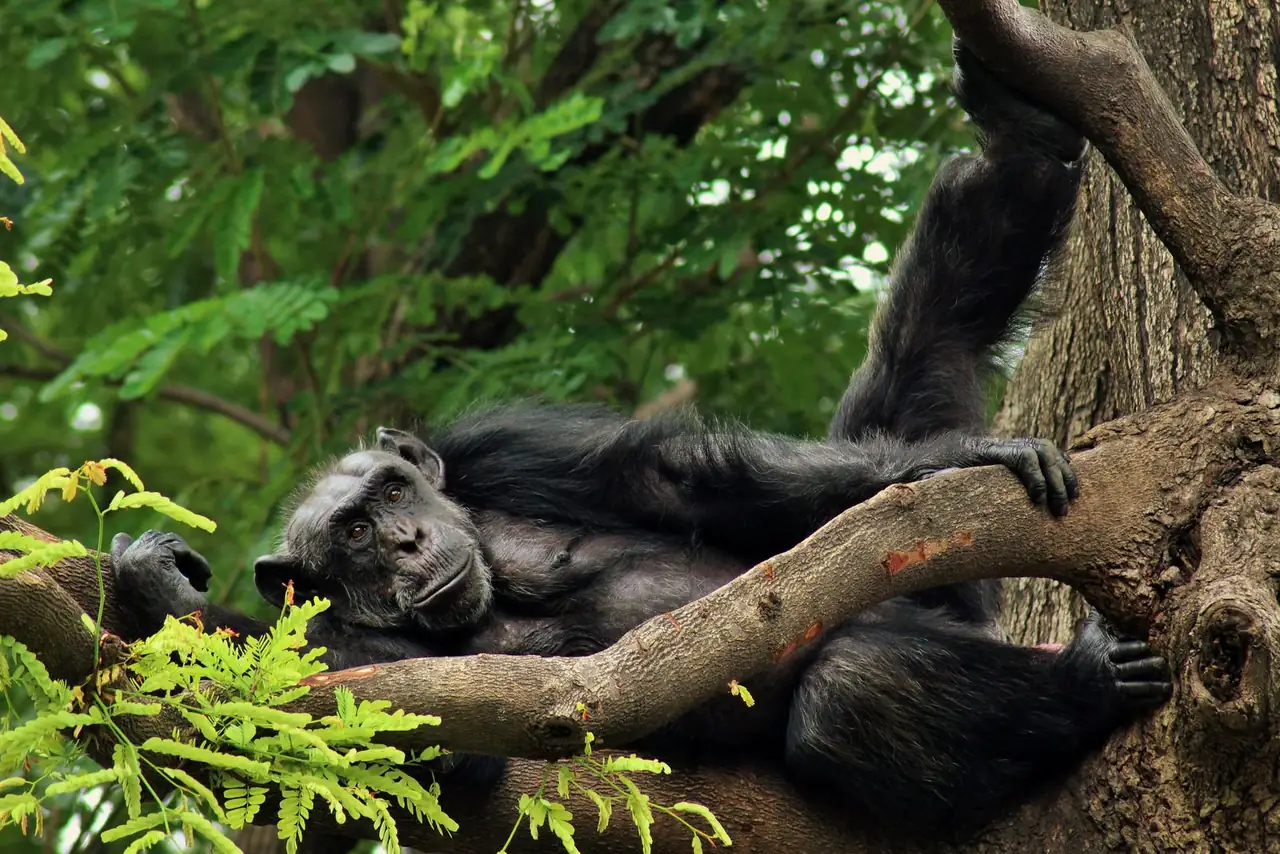
Chimpanzees live in Nyungwe and, in smaller numbers, in Gishwati Forest. They live in large communities that move every day, so tracking starts early, at about 5.30am. Treks can last from an hour to several hours depending on where the chimps nested the night before, and visitors spend a maximum of one hour with them once found.
The terrain is steep, slippery and muddy, so you need reasonable fitness and good footwear. Because primates catch human illnesses, Visit Rwanda asks that you only track if you are in good health. If you also plan gorilla trekking in Volcanoes National Park, chimps make a lively contrast: faster, noisier and usually higher in the trees.
Tea estates and colobus
Two tea estates border the forest. Gisovu, at the northern edge, offers tours with tastings and accommodation. Gisakura, on the western side, is known for its rolling tea fields and a resident troop of colobus monkeys in a patch of forest inside the plantation. Visit Rwanda notes that plantations do not deal with tourists directly, so visits are arranged through a tour operator. Tea tour prices vary, so contact us for a current quote.
Getting to Nyungwe and combining it with Lake Kivu
Nyungwe is too far for a comfortable day trip from Kigali, so plan at least two nights. Most visitors travel with a licensed driver guide in a 4x4 or comfortable car. A popular route continues from Nyungwe to Lake Kivu, which Visit Rwanda puts at around three hours by road along the lakeshore, then north to Rubavu and the gorillas.
A sample three to four day plan:
- Day 1: drive from Kigali to Nyungwe, optional stop at the King's Palace in Nyanza.
- Day 2: chimpanzee tracking at dawn, canopy walk in the afternoon.
- Day 3: colobus walk or tea estate visit, then drive to Karongi or Rusizi on Lake Kivu.
- Day 4: continue along the lake, or return to Kigali.
Transport prices depend on vehicle and season, so contact us for a current quote. If your time is shorter, look at our day trips from Kigali instead.
Checklist for your Nyungwe trip
- Passport (needed for permits and resident rates)
- Waterproof jacket and sturdy shoes, or plan to rent boots at headquarters
- Long trousers, long sleeves and gloves for chimp treks
- Snacks and reusable water bottle (plastic bags are banned in Rwanda)
- Card or Mobile Money for park payments
- Cash in Rwandan francs for tips: Visit Rwanda suggests about US$10 per day for guides and drivers and US$2 for porters
Plan your Nyungwe trip
Use the form on this page to tell us your dates, group size and budget. We will come back with Nyungwe options from RDB-licensed operators and drivers, with park fees listed separately, and help you link Nyungwe with Lake Kivu, Volcanoes or Akagera.
Frequently asked questions
How much is the Nyungwe canopy walk?
As of October 2026 the canopy walkway costs US$40 per person for international visitors, US$20 for foreign residents of Rwanda or the EAC, and RWF 5,000 for Rwandan and EAC citizens, including the guide. Park entry is paid on top. The minimum group is two, so a solo visitor pays for two.
How much does chimpanzee trekking in Rwanda cost?
Chimpanzee tracking in Nyungwe costs US$150 per international visitor as of October 2026, US$75 for residents and RWF 25,000 for Rwandan or EAC citizens, guide included. A smaller chimpanzee habituation experience for up to four people costs US$200. Park entry fees are charged separately.
Am I sure to see chimpanzees?
No. Chimpanzees move every day and tracking can take from about an hour to several hours. Visit Rwanda says you often hear them before you see them. Once the group is found, visitors stay for a maximum of one hour. Your guide and trackers work to find them, but nature decides.
How long is the canopy walkway?
The suspension bridge is 160 metres long and up to 70 metres above the ravine. You reach it on the guided Igishigishigi trail, a 2.1 km route that takes about an hour from the Uwinka Reception Centre. Paths are well kept but can be muddy after rain.
What should I wear in Nyungwe?
Wear sturdy walking shoes and bring a light raincoat, as afternoons are often wet. Long trousers and sleeves help on chimp treks through thick vegetation. Visit Rwanda notes you can rent boots, raincoats and walking sticks at the park headquarters if you travel light.
Can I visit Nyungwe as a day trip from Kigali?
It is not practical. Nyungwe is in the far south west of Rwanda, a long drive from Kigali, and chimp tracking starts at 5.30am. Most visitors stay at least two nights near the park, often continuing to Lake Kivu, which is around three hours away by road.
Where can I stay in Nyungwe?
The park runs the Uwinka and Gisovu guest houses. As of October 2026 a single room starts at US$95 per person per night in low season and US$120 in high season. Lodges and guesthouses also sit near the park edge, such as around the Gisakura tea estate.